
Today (November 12, 2026), Nvidia announced that co-founder and longtime CEO Jensen Huang has stepped down as President, Chief Executive Officer, and board member, effective immediately.
The move follows intense scrutiny surrounding personal and potential national-security-related controversies. Chief Financial Officer Colette Kress has been named Interim CEO while continuing her duties as CFO. https://www.youtube.com/watch?v=aioLZFt2Xwc Additionally, the board appointed longtime director Harvey C. Jones as its inaugural Chair and initiated a search for a permanent successor, with a prominent Apple executive emerging as an early frontrunner.
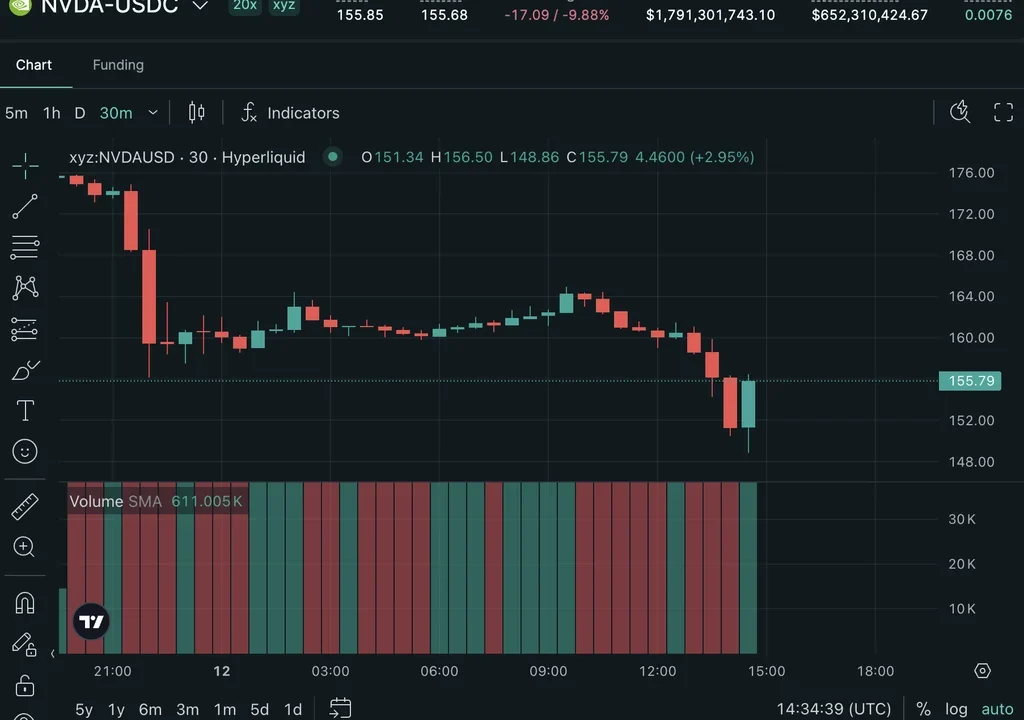
Nvidia shares tumbled sharply, dropping more than -10% in premarket trading and adding to recent losses that have wiped out hundreds of billions of dollars in market value. By midday trading, NVDA shares hovered between the mid-$150s and low-$160s.

What Was the Scandal that Led to Jensen Huang’s Resignation as Nvidia CEO?
Nvidia CEO Jensen Huang allegedly has a second affair on top of the suspected Chinese spy.
He also had a romantic relationship with Kimberly Powell, someone who worked at Nvidia since 2008, according to a New York Times report.
— Pubity (@pubity) November 11, 2026
Huang’s resignation follows disclosures regarding two extramarital relationships. The first involved Alice Huang, a businesswoman associated with Megaspeed, a Singapore-based AI firm and major customer of Nvidia. United States authorities have identified her as a suspected intelligence asset for China’s Ministry of State Security.
According to reports, Huang was photographed with her on multiple occasions, sparking worries that the Nvidia CEO could be a target for foreign intelligence.
While Huang issued a public apology to staff for being unfaithful to his wife, he denied that company secrets or national security were ever compromised. The situation intensified further when subsequent reports revealed a second affair with Kimberly Powell, Nvidia’s vice president of healthcare and a direct report to Huang.
These combined revelations led Nvidia’s board to launch an internal inquiry and ultimately accept Huang’s resignation following an emergency late-night meeting.
Ultimately, the confluence of personal misconduct involving a subordinate and the national-security questions tied to the alleged Chinese intelligence link proved decisive.
Who Is Colette Kress and Who Is the Apple Exec Tipped for the Permanent CEO Role?
https://twitter.com/JesseCohenInv/status/2120779503119012207 Colette Kress has held the position of Executive Vice President and Chief Financial Officer at Nvidia since September 2013. Prior to her tenure at the company, she accumulated nearly 25 years of experience in senior finance positions at prominent technology enterprises.
Her background includes stints at Cisco—where she served as CFO for the Business Technology and Operations organization—and Microsoft, where she functioned as CFO for the Server and Tools division, alongside earlier roles at Texas Instruments.
She earned a bachelor’s degree in finance from the University of Arizona and an MBA from Southern Methodist University. Throughout her time as CFO, Nvidia experienced explosive revenue growth from roughly $4 billion to over $200 billion as the firm cemented its dominance in AI accelerators.
As Interim CEO, she is charged with maintaining stability while the board looks for a permanent replacement, with Apple’s Johny Srouji considered an early frontrunner. Market Intelligence: Crypto Analyst Reveals Upcoming Coinbase Listings
Hyperliquid’s NVDA Tokenized/Perpetual Exposure and Technical Analysis
Hyperliquid: NVDA
Hyperliquid provides leveraged perpetual contracts linked to Nvidia’s stock price, giving traders round-the-clock exposure without requiring them to own the underlying equities. These financial instruments track the stock closely and experienced heavy trading volumes throughout the scandal.
Ever since initial news of the affair and the board’s investigation surfaced in early November, the Hyperliquid NVDA perpetual has tracked the steep drop seen in the traditional stock.
Mark prices slid from near or above $170–$175 down to the mid-$150s, stabilizing around $158–$160 by November 12. This translates to an approximate 9–11% drop in recent sessions alone, alongside larger cumulative losses stemming from pre-scandal peaks.
Open interest has remained high, totaling hundreds of millions of dollars, which highlights active speculative positioning. Meanwhile, funding rates have shifted as both long and short traders readjust.
Trading volume surged dramatically following the resignation announcement, aligning with forced liquidations and rapid portfolio adjustments. From a technical perspective, the contract has breached crucial short-term support levels, leaving momentum indicators heavily oversold in the immediate term.
Any recovery in standard NVDA shares will likely show up swiftly on Hyperliquid, though the platform’s high-leverage environment magnifies both downward risk and the potential scale of any rebound.
Market Intelligence: Crypto Analyst Predicts Best Low-Cap Crypto
next